Help Start the Next Chapter of The Loneliness Industry!
The Loneliness Industry Podcast

The Loneliness Industry Podcast

The Loneliness Industry is an applied philosophy podcast exploring loneliness, power, psychology and society through thinkers such as Michel Foucault, Sara Ahmed, Christopher Lasch, Byung-Chul Han, and Antonio Gramsci. Rather than offering self-help, it examines how social structures shape loneliness, trauma and mental health.

This is applied philosophy for the emotionally exhausted. We dig into the roots of disconnection — from toxic positivity to the cult of productivity — and reveal how…

Recent Episodes

July 9, 2026

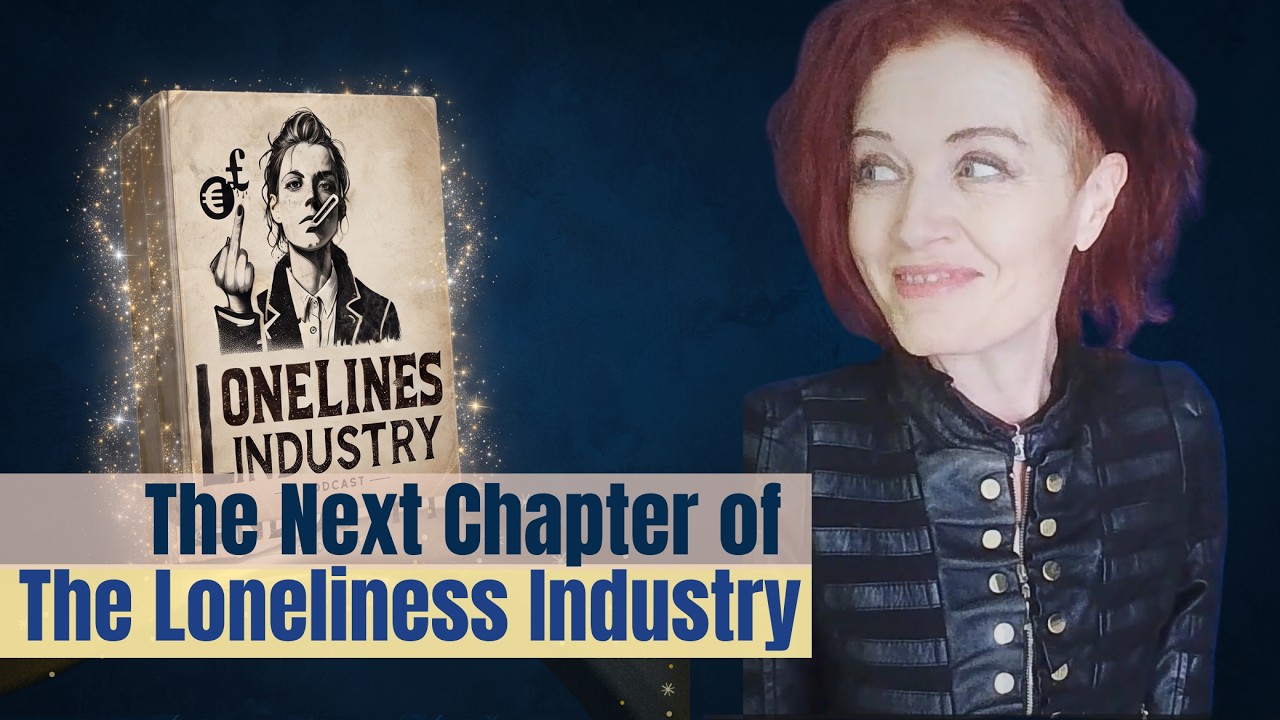
The Next Chapter of The Loneliness Industry

The Loneliness Industry Podcast became the conversation. The book becomes the map. Become part of the next chapter here: https://www.gofundme.com/create/fundraiser/review/buy-jordan-time-to-write-the-loneliness-industry-book After fifteen months of research and 27 episodes, it's time for the next chapter. The podcast explored why loneliness isn't simply a personal failing, but something produced by the systems we live within. The book will bring those ideas together for the first time, expand
July 2, 2026

What If Psychological Distress Makes Perfect Sense? - an interview with Dr. Lucy Johnstone
This episode marks the end of The Loneliness Industry. When I started this podcast, I wanted to create a space where we could think differently about loneliness—not simply as an individual problem to be solved, but as something deeply connected to power, culture, relationships and the narratives power imposes on us. Whether you've been here since the beginning or found the podcast more recently, thank you for spending your time thinking alongside me. It felt fitting that the final episode should
June 17, 2026

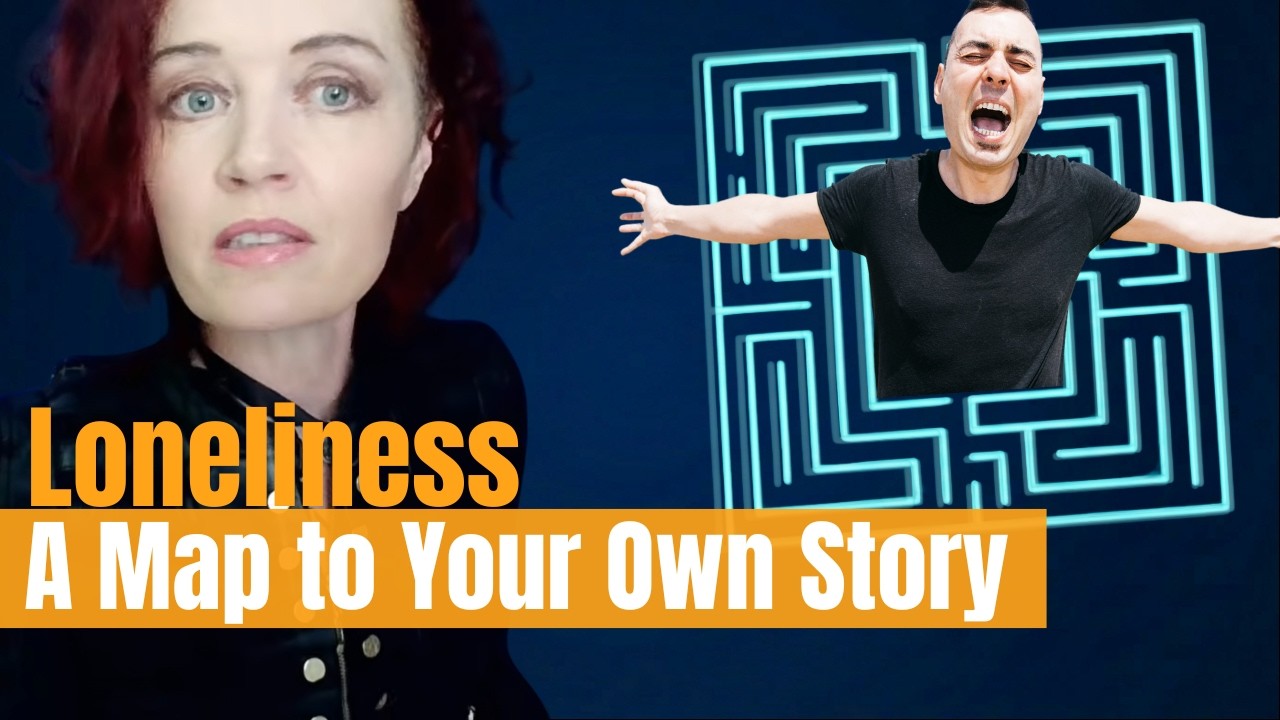
Why Most Loneliness Advice is Actually a "Faulty Compass"
Have you ever found yourself asking: "Why am I so lonely?" "Why doesn't the advice work?" "Why do I still feel isolated?" Have you tried all the usual loneliness advice and still feel just as isolated? This video offers a different approach. Using the Power Threat Meaning Framework (PTMF), you'll learn how to understand your loneliness by creating a personal map of your experiences, relationships and environment, rather than assuming something is wrong with you. Rather than offering another
May 21, 2026

The Anatomy of the "Golden Child": A Systemic Analysis of Megastars
Welcome back to The Loneliness Industry. Today, we transition from theory to a real-life analysis of modern megastars—an exercise in applied philosophy. Using the model developed in our recent series, we examine a system we are all deeply embedded in: the global digital infrastructure that shapes our social reality. We explore how "narcissistic systems" function not through individuals, but through a specific foundation of values that produce restrictive roles—the Scapegoat, the Helper, the Lost
May 21, 2026

Institutional Betrayal: What Happens When You Question MrBeast? (Part 2)

What happens when the carefully constructed public image of a massive digital institution faces open public contradiction? In part two of this systemic case study, we examine how a corporate ecosystem retaliates and what specific tactics it deploys when its primary Golden Hero is questioned. In this final segment of our analysis, we look at the aggressive mechanics used to neutralize structural critique, control information leaks, and convert real employee allegations into mere atmospheric nois
May 7, 2026

The Anatomy of the "Golden Child": A Systemic Analysis of Megastars

Welcome back to The Loneliness Industry. Today, we transition from theory to a real-life analysis of modern megastars—an exercise in applied philosophy. Using the model developed in our recent series, we examine a system we are all deeply embedded in: the global digital infrastructure that shapes our social reality. We explore how "narcissistic systems" function not through individuals, but through a specific foundation of values that produce restrictive roles—the Scapegoat, the Helper, the Lost
April 24, 2026

The Architecture of Isolation: How Roles Create Loneliness
Are you looking for solutions to loneliness in your professional or personal life? Often, the sense of isolation we feel isn't a personal failure, but a structural outcome of the systems we inhabit. In this final part of our series on Systemic Dynamics, we explore how workplaces, institutions, and social groups sort individuals into specific roles that can either foster connection or deepen alienation. Using innovative research on connection, we dive into the research of Alice Miller, Murray Bow
April 10, 2026

The Tactics That Make You Question Your Reality

If your find yourself repeatedly feeling confused, ashamed, or like everything is somehow your fault — this episode is for you. This is Part II of a series on how to recognise a narcissistic system — whether that’s a toxic workplace, relationship, family, or even a wider social environment. Because narcissistic systems aren’t just about difficult individuals. They are about patterns that scale to whole systems. In Part I, we looked at the values narcissistic systems promote. In this episode, we
April 2, 2026

How to Spot a Narcissistic System: The Architecture of Loneliness

Why is it that when we feel depressed, we’re told to check whether we’re surrounded by the wrong people — but when we feel lonely, we assume there’s something wrong with us? Why don’t we ask about the system we’re in? Because what if loneliness isn’t a personal failure — but the result of being inside a structure that produces it? This is exactly the shift Christopher Lasch forces us to make. Instead of asking whether we’re dealing with difficult individuals, he asks a broader question: can n
March 5, 2026

The Hussey Hustle: Deconstructing Why Dating Advice Doesn't Work
Does modern dating advice help us find love, or does it just teach us how to manage a "commodity"? In this episode of The Loneliness Industry, we pull back the curtain on the mechanics of modern dating—specifically the "performance-based" advice of Matthew Hussey. We explore how phrases like "high-value," "investment," and "maintaining power" have turned the search for intimacy into a game of strategy where everyone is performing and nobody is actually being seen. The Philosophical Critique:We
Feb. 19, 2026

Why "Positive" Friends Are Just Unpaid Prison Guards
Have you ever been ghosted or "fired" by a friend because your grief was "too heavy" for their "capacity"? In this episode of The Loneliness Industry, we dive into the philosophy of toxic positivity and explore why the modern obsession with "optimizing for the positive" is actually a weapon used to destroy the friendship bond. We aren't talking about abusive situations ; we are talking about the refusal to be inconvenienced by real human woes. With the help of Byung-Chul Han, Sara Ahmed, Antonio
Feb. 5, 2026

The Panopticon Trap: How "Help" Becomes Internalised Surveillance

This video is a philosophical case study and critical deconstruction. It utilizes brief excerpts of copyrighted material under the Fair Use doctrine (Section 107 of the U.S. Copyright Act) for purposes such as criticism, comment, and educational analysis. The intent is not to disparage the creator personally , but to examine the underlying societal values, power dynamics, and "compliance" frameworks present in modern self-help messaging. This video provides significant transformative value by ap

About the Host

jordan reyne Profile Photo
jordan reyne

Public Philosopher/ Speaker/ Performer

Jordan Reyne is a philosophy graduate from the University of Auckland, New Zealand. She works as a public philosopher, writer, and public speaker, and was formerly a professional musician and artist. Jordan has accidentally lived in four different versions of capitalism — from early-stage (Poland) to late-stage (Germany), with New Zealand and the UK slotting in between. Despite a lifelong passion for philosophy, she did not set out to conduct a cross-cultural study of capitalism; it happened unintentionally while trying to navigate a somewhat challenging life as an artist with inconvenient illnesses. When the same ideological machinery shows up in different languages, it does not suffice to hide the pattern.

Jordan’s current work focuses on phenomenology, existentialism, critical theory, and the analysis of power — including the Foucauldian kind that doesn’t yell or point guns, but quietly rearranges your behaviour from inside your skull. She is also completing a degree in Psychology, the institutionally approved perspective that locates all blame, control, and pathology within the atomised individual. Despite this — or because of it — she maintains the heretical view that society, institutions, and power structures do in fact affect human beings (so she may well fail this additional qualification).

Jordan’s early life provided a neat micro-demonstration of power’s two great modes: overt authoritarianism (via a father who favoured the outbursts and rage of a standard totalitarian model) and covert ideological power (via a mother whose preference for guilting and shaming invoked a level of internal surveillance only matched by late-stage capitalism). Jordan later discovered that these dynamics were not unique to her household; the same structures simply reappeared — fluffed to twice their size — in offices, institutions, governments, relationships, and wellness cults with better branding.

Before becoming a public philosopher, Jordan spent over 30 years as a musician in the underground art-rock, goth, and metal scenes. She toured throughout Europe and her home country, playing shows from Glastonbury to the Big Day Out, Wave-Gotik-Treffen, Whitby Goth Weekend, Soundedit and many more, and working on projects ranging from Resident Evil 7 to The Lord of the Rings and Café del Mar. Her artwork has been exhibited in Germany and Poland, and she has released three novels — two of which appear on Choice of Games as interactive fiction works. She has also written for Sound on Sound and Kitmonsters, and presented tech workshops on loop stations and online streaming technology throughout the world.

Yep, none of that last paragraph seems to have much to do with philosophy — but only if your definition of philosophy involves an old white guy, an office in a university, and a grant application. Jordan’s version comes from living an actual life in the wild: working, surviving, and dealing with systems rather than theorising about them from a safe distance. This is precisely why she’s able to make philosophy legible to those who need it most — the people capitalism sidesteps, blames, gaslights, and then tells to “manifest” their way out of structural problems.

Jordan will not insult your intelligence — or scam your wallet — by promising solutions, transformation, realignment, activation, or any other verb favoured by expensive retreats. Instead, she offers clarity, critique, dark humour, and the quiet relief that comes from recognising that loneliness is not a moral failure. It is a structural feature of a world built on control, competition, and the persistent insistence that if you feel alone, it must somehow be your fault.