Oct. 17, 2025
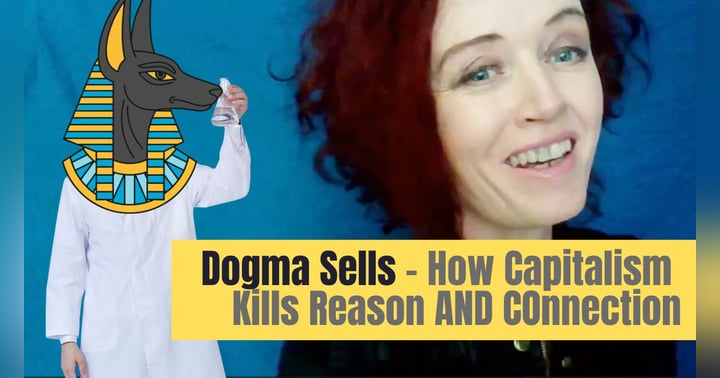
E14 How to Save Yourself from Loneliness, Disconnection, and Dogma

What do Joe Dispenza, Jordan Peterson, and the Music Pedant at every hipster party have in common?
They all kill curiosity — the one trait that fuels connection, reason, and genuine understanding.
In this episode of The Loneliness Industry, public philosopher Jordan Reyne unpacks how capitalism, science, and self-help culture all feed the same mechanism Karl Jaspers called “un-reason” — the death of curiosity. Using humour, philosophy, and real-world examples, Reyne reveals how “fake endings” in conversation (the faux terminus) shut down inquiry, divide people into in-groups and out-groups, and keep power, profit, and prestige intact.
Through comedic dialogues with:
The Music Pedant (the gatekeeper of cool),
The Western Spiritualist (the holier-than-thou salesman), and
Jordan Peterson (the tool-defender of failing paradigms),
this episode maps how dogma replaces curiosity across science, spirituality, and social life — and how that loss of curiosity isolates us from each other.
Part one explores how inquiry dies; part two will follow where profit thrives when it does — in beauty, health, and self-improvement industries.
🧩 What’s Covered
- Just how vital curiosity is to connection, intimacy, knowledge and understanding.
- Why an absence of curiosity is literally un-reasonable
- The meaning of un-reason and why Karl Jaspers saw curiosity as essential to reason itself
- How Thomas Kuhn’s paradigm theory explains scientific “stuck phases” and dogmatic backlash
- Why capitalism kills curiosity (Adorno & Horkheimer’s critique of market-driven knowledge)
- How “tools” like IQ tests and BMI become holy grails defending broken paradigms
- Examples of faux termini — conversational “fake full stops” that shut down dialogue.
- How un-reason drives loneliness and alienation by replacing connection with performance
- A six-question “Faux-Terminus Detection Kit” to keep curiosity alive
- Why curiosity, not compliance, is the true act of rebellion under capitalism
🧠 Philosophers & Thinkers Mentioned
Karl Jaspers – concept of un-reason and the role of curiosity in reason
Thomas Kuhn – Structure of Scientific Revolutions and paradigm shifts
Theodor Adorno & Max Horkheimer – critique of capitalism’s suppression of inquiry
Karl Popper – falsifiability and the problem of unfalsifiable claims
Immanuel Kant – the paralogism and errors of reason
Richard Lewontin – genetic variation and the fallacy of racial intelligence
(With comedic mentions of Copernicus, Einstein, and even Nietzsche
The Loneliness Industry, Jordan Reyne, capitalism and reason, un-reason, Karl Jaspers, Thomas Kuhn, paradigm shift, Adorno, Horkheimer, Popper, Kant, curiosity and reason, dogma, faux terminus, critical thinking, Jordan Peterson critique, Joe Dispenza debunked, pseudo-science, self-help critique, science and ideology, loneliness and capitalism, structural loneliness, empowerment narratives, connection vs performance, philosophical podcast, public philosophy, anti-self-help, body metrics critique, BMI and bias, IQ and racism, epistemology, cultural critique, modern dogma, paradigm collapse.
They all kill curiosity — the one trait that fuels connection, reason, and genuine understanding.
In this episode of The Loneliness Industry, public philosopher Jordan Reyne unpacks how capitalism, science, and self-help culture all feed the same mechanism Karl Jaspers called “un-reason” — the death of curiosity. Using humour, philosophy, and real-world examples, Reyne reveals how “fake endings” in conversation (the faux terminus) shut down inquiry, divide people into in-groups and out-groups, and keep power, profit, and prestige intact.
Through comedic dialogues with:
The Music Pedant (the gatekeeper of cool),
The Western Spiritualist (the holier-than-thou salesman), and
Jordan Peterson (the tool-defender of failing paradigms),
this episode maps how dogma replaces curiosity across science, spirituality, and social life — and how that loss of curiosity isolates us from each other.
Part one explores how inquiry dies; part two will follow where profit thrives when it does — in beauty, health, and self-improvement industries.
🧩 What’s Covered
- Just how vital curiosity is to connection, intimacy, knowledge and understanding.
- Why an absence of curiosity is literally un-reasonable
- The meaning of un-reason and why Karl Jaspers saw curiosity as essential to reason itself
- How Thomas Kuhn’s paradigm theory explains scientific “stuck phases” and dogmatic backlash
- Why capitalism kills curiosity (Adorno & Horkheimer’s critique of market-driven knowledge)
- How “tools” like IQ tests and BMI become holy grails defending broken paradigms
- Examples of faux termini — conversational “fake full stops” that shut down dialogue.
- How un-reason drives loneliness and alienation by replacing connection with performance
- A six-question “Faux-Terminus Detection Kit” to keep curiosity alive
- Why curiosity, not compliance, is the true act of rebellion under capitalism
🧠 Philosophers & Thinkers Mentioned
Karl Jaspers – concept of un-reason and the role of curiosity in reason
Thomas Kuhn – Structure of Scientific Revolutions and paradigm shifts
Theodor Adorno & Max Horkheimer – critique of capitalism’s suppression of inquiry
Karl Popper – falsifiability and the problem of unfalsifiable claims
Immanuel Kant – the paralogism and errors of reason
Richard Lewontin – genetic variation and the fallacy of racial intelligence
(With comedic mentions of Copernicus, Einstein, and even Nietzsche
The Loneliness Industry, Jordan Reyne, capitalism and reason, un-reason, Karl Jaspers, Thomas Kuhn, paradigm shift, Adorno, Horkheimer, Popper, Kant, curiosity and reason, dogma, faux terminus, critical thinking, Jordan Peterson critique, Joe Dispenza debunked, pseudo-science, self-help critique, science and ideology, loneliness and capitalism, structural loneliness, empowerment narratives, connection vs performance, philosophical podcast, public philosophy, anti-self-help, body metrics critique, BMI and bias, IQ and racism, epistemology, cultural critique, modern dogma, paradigm collapse.